- Oscilloscopes & Vectorscopes Deals
- sku: 2144464150757533
- UNI UT-P33
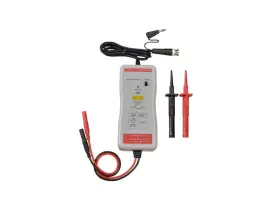
UT-P33 UNI-T Differential Probe Attenuation Bandwidth
| Brand | UNI-T |
|---|---|
| Manufacturer Part Number | UT-P33 |
| Type | TOOL |
Review UNI-T Differential Probe Attenuation 100 1/1000 Bandwidth 120mhz
The UNI-T UT-P33 Differential Probe is a versatile and high-performance diagnostic tool designed for precisely measuring voltage differences between two signal lines in various electrical applications. With a bandwidth of 120 MHz and an attenuation of 1/1000, this probe offers exceptional accuracy and resolution, making it suitable for troubleshooting high-frequency signals.
The UT-P33 Differential Probe is designed with a shielded probe tip, which effectively mitigates electromagnetic interference (EMI) and radio frequency interference (RFI), ensuring the signal being measured remains undistorted. The probe tip provides a high input impedance to avoid loading the signal lines under test and maintains a good contact with the test leads due to its superior spring tension. This feature ensures precise voltage measurement readings.
The compact design of the UT-P33 probe offers ease of use, portability, and durability for a wide range of applications. The probe comes with interchangeable test leads that cater to various connection configurations, allowing you to measure differential AC signals directly from printed circuit boards, edges of chips, or any other high-impedance sources.
The automatic ground balancing feature of the UT-P33 Differential Probe automatically eliminates common-mode interference, ensuring accurate results by keeping the ground angle stable. This feature significantly reduces the time spent on diagnosing and adjusting any common-mode interference issues, making your work more efficient.
Suitable for automotive, industrial, telecommunication, and electronic applications, the UNI-T UT-P33 Differential Probe delivers excellent measurement accuracy for high-performance differential signal analysis. Its large, easy-to-read LCD display shows the measured voltage difference between the differential signals, and automatic fluctuation compensation ensures consistency and stability in the readings. The rugged design and robust build quality ensure long-lasting performance and dependability in challenging environments.
A unity gain differential probe with an attenuation of 1/1000, a bandwidth of 120MHz is a specialized test equipment used for measuring differential signals in high-frequency and high-speed applications. Here are the pros and cons of purchasing such a probe:
Pros:1. High Frequency Response: A 120MHz bandwidth allows the probe to accurately measure signals in the GHz frequency range, making it suitable for measuring high-speed digital signals and communication interfaces, such as PCIe, USB, and HDMI.
2. Low Distortion: The unity gain probe design reduces the amount of signal distortion compared to active probes, providing a more accurate measurement of the differential signal.
3. High Resolution: With an attenuation of 1/1000, this probe offers a high resolution, enabling the measurement of small voltage differences.
4. Suitability for Differential Signals: Differential probes, in general, have better common-mode rejection compared to single-ended probes. This feature reduces the influence of common-mode interference, making it ideal for measuring differential signals.
Cons:1. Cost: Unity gain differential probes with a 1/1000 attenuation and a 120MHz bandwidth tend to be more expensive compared to single-ended probes or less advanced differential probes.
2. Complexity: Using this type of probe requires a higher level of expertise to set it up and calibrate it properly, and its use might not be suitable for casual users or inexperienced technicians.
3. Size and Form Factor: Unity gain differential probes are generally larger and bulkier compared to single-ended probes, which can make them less portable.
4. Limited Measurement Range: This type of probe is optimized for high-speed differential signals and is, therefore, limited in its ability to measure low-frequency or DC signals.
In conclusion, purchasing a unity gain differential probe with an attenuation of 1/1000 and a bandwidth of 120MHz is suitable for users who work on high-frequency applications dealing with differential signals. The high resolution and low distortion make it an excellent choice for measuring and analyzing high-speed digital signals in various industries, such as telecommunications and data centers. However, its cost, complexity, size, and limited measurement range may make it less attractive to hobbyists or casual users.
If you don't need the high accuracy, resolution and frequency response this probe offers and only require a cheaper, more straightforward solution for probing differential signals, consider purchasing a less advanced differential probe or a dedicated application-specific measuring instrument, such as an oscilloscope or a logic analyzer.
Details:
Please consider troubleshooting prior to making a return request. Band width : 120mhz. Photos are greatly appreciated. Probe attenuation: 100:1/1000:1.
Differential probe, probe attenuation: 10:1/100:1, band width mhz: 120mhz, voltage : 14 KP, features:: probe.
specifications oscillovectscopes:
- brand: Uni-t
- mpn: Ut-p33
- type: Tool
offer oscillovectscopes:
- in stock #: 5
- sold #: 22
- availability: in stock
- started: january 4, 2025
- options: ship-to-home
- prices: $764.79–$1396.00
- item condition: New
general oscillovectscopes:
- category: Business & Industrial > Test, Measurement Inspection > Analyzers Data Acquisition > Oscilloscopes Vectorscopes
payments oscillovectscopes:
- wallet: paypal
- credit card: visa
- other
shipping oscillovectscopes:
- class: standard
- carrier: ups
- type: calculated
- transit: 4-11 days
- service: ups ground
seller oscillovectscopes:
- city: jonestown, pennsylvania
- # reviews: 11036
- rating: 97.6%
returns oscillovectscopes:
- policy: returns accepted
- method: money back
- time: 30 days
- paid by: seller
Similar Items:
- Uni-t Ut-p36 Uni-t Differential Probe Attenuation 200 1 500 1 Bandwidth 100mhz Please consider troubleshooting prior to making a return request. Photos are greatly appreciated. Band width : 100MHZ. Differential probe, probe attenuation: 200:1/500:1, band width mhz: 100MHZ, voltage : 560VDC PEAKAC/5600VDC peak ac, accuracy: 2%, features:: 200:1/500:1...(January 4th, 2025)
- Uni-t Ut-p41 Uni-t Current Probe Voltage Output 100mv a 10mv a Max A Dc 100a F Current probe, voltage : output: 100MV/A, 10MV/A, max a ac: n/a, max dc: 100A, frequency: dc 100KHZ, features:: probe. Photos are greatly appreciated. Please consider troubleshooting prior to making a return request. Max current: 100A...(January 4th, 2025)
- Uni-t Ut-p44 Uni-t Current Probe Voltage Output 50mv a Max 40a They are used to measure the circuit current with an oscilloscope using electromagnetic induction and magneto-electric. The delay time of any two probes is less than 1NS.FEATURES:: current probe. Please consider troubleshooting prior to making a return request. They can be used to do power analysis ...(February 21st, 2025)
- Uni-t Ut-p31 Uni-t Differential Probe Attenuation 10 1 100 1 Bandwidth 100mhz Uni-t UT-P31 - differential probe, attenuation: 10:1/100:1, band width : 100MHZ, voltage : 1500VPP the is a 100MHZ differential probe.features:: probe. Please consider troubleshooting prior to making a return request. Photos are greatly appreciated...(February 21st, 2025)
- Uni-t Ut-p32 Uni-t Differential Probe Attenuation 100 1 1000 1 Bandwidth 50mhz Please consider troubleshooting prior to making a return request. Photos are greatly appreciated. voltage : 3.0KVPP. Uni-t UT-P32 - differential probe, attenuation: 100:1/1000:1, band width : 50MHZ, voltage : 3000VPP the is a 50MHZ differential probe.features:: probe attenuation: 100:1/1000:1...(February 21st, 2025)
- Uni-t Ut-p40 Uni-t Current Probe Voltage 600vrms Output 50mv a 5mv a Max Photos are greatly appreciated. Please consider troubleshooting prior to making a return request. Uni-t UT-P40 - current probe, voltage : 600VRMS, output: 50MV/A, 5MV/A, max current: 60A, frequency: DC-100KHZ this is a dc to 100KHZ current probe.features:: probe...(February 21st, 2025)
- Uni-t Ut-p42 Uni-t Current Probe Voltage Output 50mv a 5mv a Max 200a Photos are greatly appreciated. voltage : 600VRMS. Uni-t UT-P42 - current probe, voltage output: 50MV/A, 5MV/A, max current: 200A, frequency: DC-150KHZ this is a current probe that can measure currents up to 200A.FEATURES. Please consider troubleshooting prior to making a return request...(February 21st, 2025)
- Uni-t Ut-p30 Uni-t Differential Probe Attenuation 10 1 100 1 Bandwidth 100mhz Photos are greatly appreciated. Uni-t UT-P30 - differential probe, attenuation: 10:1/100:1, band width : 100MHZ, voltage : 800VPP the is a 100MHZ differential probe.features:: probe. Please consider troubleshooting prior to making a return request...(February 24th, 2025)
- Uni-t Ut-p20 Uni-t High Voltage Passive Probe Attenuation 100 1 Bandwidth Photos are greatly appreciated. Band width : 250MHZ. voltage : 1500VPP. Please consider troubleshooting prior to making a return request. Probe attenuation: 100:1...(January 28th, 2026)
- Uni-t Ut-p08a Uni-t Passive Probe Attenuation 10 1 Bandwidth 350mhz Voltage voltage : 600VPP. Photos are greatly appreciated. Band width : 350MHZ. Probe attenuation: 10:1. Passive probe. Please consider troubleshooting prior to making a return request...(January 28th, 2026)
- Uni-t Ut-p06 Uni-t Passive Probe Attenuation 10 1 Bandwidth 300mhz Voltage Probe attenuation: 10:1. voltage : 600VPP. Photos are greatly appreciated. Please consider troubleshooting prior to making a return request. Passive probe. Band width : 300MHZ...(January 28th, 2026)
