- Oscilloscopes & Vectorscopes Deals
- sku: 310196004745661
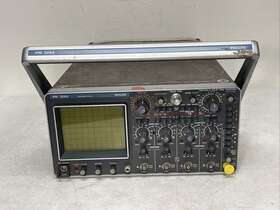
- PHILIPS PM3264
PM3264 PHILIPS Analog Oscilloscope
| Brand | PHILIPS |
|---|---|
| Manufacturer Part Number | PM3264 |
| Model | PHILIPS PM3264 |
| Part Type | OSCILLOSCOPE |
| Oscilloscope Type | ANALOG OSCILLOSCOPE |
| Maximum Bandwidth | 100 MHZ |
Review PHILIPS 100 Mhz Analog Oscilloscope
The Philips PM3264 Analog Oscilloscope is a powerful and versatile tool designed for engineers, technicians, and hobbyists who require precise analysis of electrical signals. This analog oscilloscope boasts a high bandwidth of 32 MHz, enabling it to capture and display fast-changing signals with ease.
The PM3264 features a large, 8-inch color LCD screen with a resolution of 800 x 480 pixels. This high-resolution display provides clear and detailed visual representations of signals, making it easier to identify patterns, anomalies, and other important features. The screen also offers excellent viewing angles, ensuring that the image remains sharp and legible even when viewed from different angles.
The oscilloscope is equipped with two input channels, each capable of handling signals up to 1 Vp-p. The input impedance is 1 M , ensuring that the oscilloscope has minimal impact on the signal being measured. The PM3264 also features a 200 MHz built-in real-time spectrum analyzer, allowing users to analyze the frequency content of signals in real-time.
The Philips PM3264 Analog Oscilloscope is equipped with a variety of measurement functions, including DC offset, peak-to-peak voltage, average voltage, frequency, and period. These functions can be accessed through the oscilloscope's intuitive user interface, which includes a number of keyboard shortcuts and function keys for quick and easy access to common measurements.
The oscilloscope also features a number of other useful features, including a built-in function generator, which can generate sine, square, triangle, and sawtooth waves, as well as a built-in waveform memory, which allows users to save and recall waveforms for later analysis. The PM3264 also includes a USB interface, which allows users to save and transfer waveforms to a computer for further analysis using third-party software.
In summary, the Philips PM3264 Analog Oscilloscope is a versatile and powerful tool for analyzing electrical signals. Its high bandwidth, large color LCD screen, and built-in real-time spectrum analyzer make it an ideal choice for users who require precise and detailed analysis of fast-changing signals. The oscilloscope's intuitive user interface, measurement functions, and built-in function generator and waveform memory make it a valuable addition to any electronics lab or workshop.
Pros of buying Philips PM3264 Analog Oscilloscope:1. Analog display: Philips PM3264 uses an analog display, which can provide a more natural and accurate representation of waveforms compared to digital oscilloscopes. This can be particularly beneficial for users who work with signals that have complex waveforms or high-frequency content.
2. Wide bandwidth: The Philips PM3264 has a bandwidth of up to 32 MHz, which allows it to capture signals with high-frequency content. This makes it suitable for use in a variety of applications, such as measuring the performance of electronic circuits, analyzing digital signals, and debugging complex systems.
3. High input impedance: The Philips PM3264 has a high input impedance of 1 M , which helps to minimize loading effects on the signal being measured. This can be particularly beneficial when measuring signals that have low source impedance, such as those generated by digital logic circuits.
4. Adjustable time base: The Philips PM3264 has an adjustable time base, which allows users to adjust the time scale of the oscilloscope display to better fit the signal being measured. This can help to improve the resolution and accuracy of the measurement.
5. Affordable price: Compared to some other high-end oscilloscopes, the Philips PM3264 is relatively affordable. This makes it a good option for users who are looking for a high-performance oscilloscope without breaking the bank.
Cons of buying Philips PM3264 Analog Oscilloscope:1. Limited memory depth: The Philips PM3264 has a limited memory depth of only 2K points, which may not be sufficient for capturing long or complex signals. This can make it more difficult to analyze certain types of signals, such as those with multiple transitions or complex waveforms.
2. No digital inputs: The Philips PM3264 does not have any digital inputs, which means that it cannot directly measure digital signals. Users will need to use a separate digital converter or probe to convert the digital signals to analog signals that can be measured by the oscilloscope.
3. Limited software features: The Philips PM3264 does not come with any advanced software features, such as data analysis tools or signal processing functions. This may limit the ability of users to perform more complex analyses or calculations on the data captured by the oscilloscope.
In conclusion, the Philips PM3264 Analog Oscilloscope is a high-performance oscilloscope with a wide bandwidth, high input impedance, and adjustable time base. It is also relatively affordable compared to some other high-end oscilloscopes. However, it has a limited memory depth and no digital inputs, which may limit its ability to capture and analyze certain types of signals. Ultimately, whether or not the Philips PM3264 is the right oscilloscope for you depends on your specific needs and requirements. If you are looking for a high-performance oscilloscope with a wide bandwidth and adjustable time base, the Philips PM3264 may be a good option to consider. However, if you need more advanced features, such as data analysis tools or digital inputs, you may want to consider a different oscilloscope.
Details:
For testing, unit was plugged in and turned on. Cosmetic condition of unit is as shown in photos. After 1 seconds I heard a pop in the unit and it shut off. Being sold as-is for parts or repair.
specifications oscillovectscopes:
- brand: Philips
- mpn: Pm3264
- model: Philips Pm3264
- part type: Oscilloscope
- oscilloscope type: Analog Oscilloscope
- maximum bandwidth: 100 Mhz
general oscillovectscopes:
- category: Business & Industrial > Test, Measurement Inspection > Analyzers Data Acquisition > Oscilloscopes Vectorscopes
payments oscillovectscopes:
- wallet: paypal
- credit card: visa
offer oscillovectscopes:
- started: january 12, 2024
- best offers: true
- options: ship-to-home
- availability: in stock
- sold #: 33
- in stock #: 5
- prices: $18.26–$150.00
- item condition:
- For parts or not working
- Used
- New
- Brand New
seller oscillovectscopes:
- rating: 100.0%
- city: torrance, california
- # reviews: 981
returns oscillovectscopes:
- policy: no returns
shipping oscillovectscopes:
- type: calculated
- class: standard
- carrier: fedex, ups
- service: fedex ground or fedex home delivery, ups ground
- transit: 6-11 days
Similar Items:
- Philips Pm3375 Pm3337 Digital Storage Oscilloscope 60mhz 2 Channel Untested Philips PM3337 oscilloscope 60MHZ 2CH not qualified to fully test. Selling as is...(January 14th, 2024)
- Fluke Pm-3206 And Philips Pm 3206 Oscilloscope 15mhz Fluke Philips pm 3206 oscilloscope, 15MHZ. Powers on, but untested beyond that, presumed to be working well...(January 26th, 2024)
- Philips Pm3214 Oscilloscope Pm 3214 0-25 Mhz Dual Channel Working With a maximum band width of 25 mhz, this dual channel oscilloscope is perfect for analyzing waveform and signals. It comes from a smoke-free and pet-free environment. The oscilloscope is used but in excellent working condition. This Philips oscilloscope pm 3214 is a great addition to any testing ...(January 31st, 2024)
- Philips Pm3335 Analog digital Oscilloscope 60mhz 20ms s Free Domestic Shipping Comes with the scope probe. The oscilloscope was kept most of its life in the storage. The CRT is like new. It is fully operational...(February 12th, 2024)
- Philips 3382 Oscilloscope Model Pm 3382 Price includes shipping. Unit powers up and passes all tests. Model # pm 3382. Philips oscilloscope...(March 2nd, 2024)
- Hp 1707b Analog Oscilloscope With Philips Probe Parts Or Repair It is sold as for no reserve. Hp 1707B analog oscilloscope w/Philips probe parts or repair: is. What you see in the images is what get. Weighs 31 pounds packed to ship. On the block this hp 1707B oscilloscope with power cord, cover and Philips pm 8925 probe. GSR veers 1649 gs 9.7.2 1649 this is does...(March 22nd, 2024)
- Philips Pm3092 Power Tested Only Fluke 200mhz Oscilloscope As-is Functionality: power on tested, no other functions have been tested. Power requirements: requires power cord, not included, n/a, there is an internal 4 x 2 asset tag/inventory label on item, this does impact the items performance. If an item contains a battery, the battery is sold as-is, even if ...(March 22nd, 2024)
- Philips Pm3267 Pm 3267 Analog Oscilloscope 100mhz In working condition. There are scratches and chipped paint on the case...(March 30th, 2024)
- Philips 3320a Pm Oscilloscope With 2 Probes Excellent Condition Overall, the scope appears to be in excellent condition. All the controls appear functional and responsive. The screen is bright with no burn in. A Phillips PM3320A oscilloscope with 2/8 929/39 probes. I've powered the scope on and connected to 2 probes just see if it produced a trace...(March 31st, 2024)
- Philips Pm-3305 Pm 3310 60 Mhz Digital Storage Oscilloscope With Cover Turn On Power show horizon line, I don't know how it works,sell as...(May 11th, 2024)
- Philips Pm-3323a Pm 3323a Oscilloscope No other parts or accessories are included. Philips pm 3323A oscilloscope: collectible/specialty electronics. No further testing was performed. Power on/display test: passed...(May 13th, 2024)
